(U.S. – China talks in Beijing amid the transformation of global leadership, technological rivalry, and the search for new mechanisms of international stability)
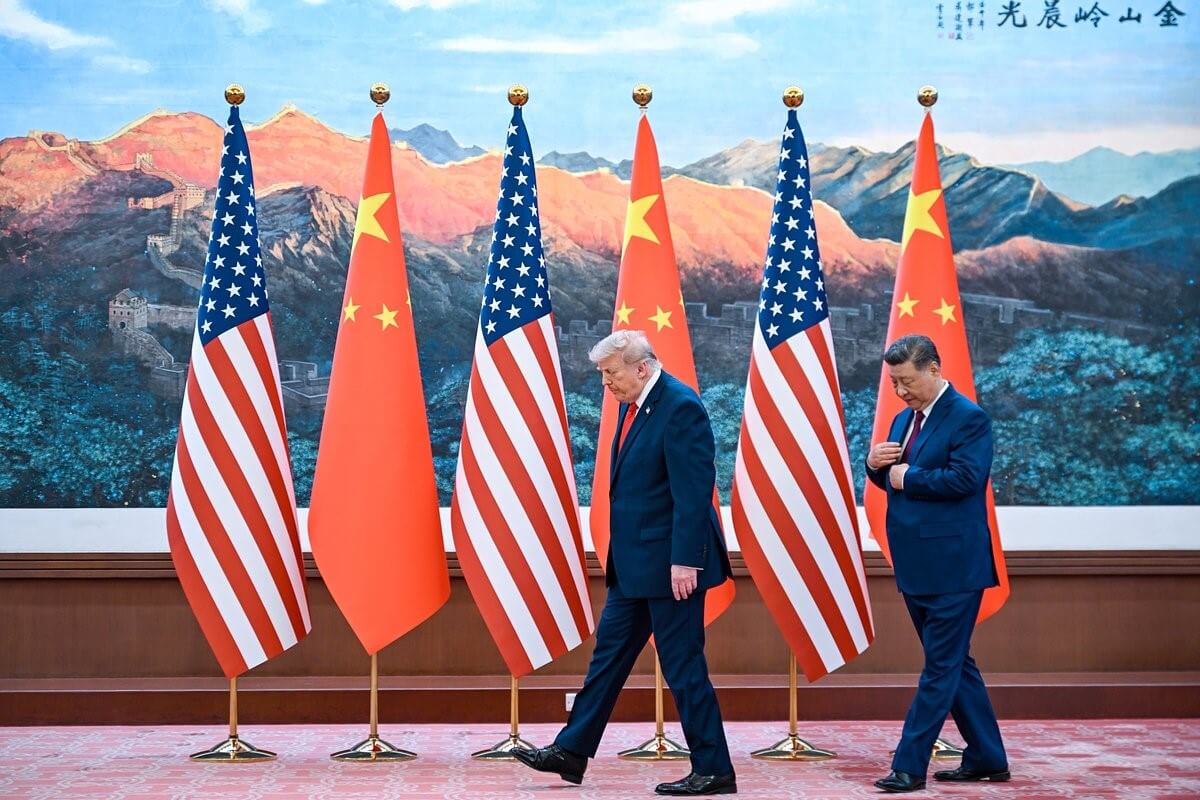
The three-day state visit of U.S. President Donald Trump to the People’s Republic of China on 12-15 May 2026, became one of the most significant diplomatic events in contemporary world politics. According to the official announcement of the Ministry of Foreign Affairs of the People’s Republic of China, the visit took place at the invitation of Chinese President Xi Jinping [1]. The very fact of this visit demonstrates that relations between the United States and China have entered a new phase, in which the era of direct pressure, tariff wars, and technological containment has not disappeared, but is increasingly being supplemented by the necessity of political bargaining, reciprocal calculation, and managed rivalry.
The main significance of this meeting lies not only in the bilateral agenda of the United States and China. It has a broader international dimension. Five key problems of the contemporary world order were effectively placed on the negotiating table in Beijing: the prospects for ending the war with Iran, the trade truce, the Taiwan question, relations with Russia, and control over artificial intelligence technologies. Each of these issues, taken separately, is capable of influencing global security. Taken together, they form a new geopolitical formula of the twenty-first century, in which economic interdependence, technological superiority, energy security, and diplomatic mediation become parts of a single strategic equation.
It is symbolic that the visit took place precisely in Beijing. If two decades ago most major international solutions were expected from Washington, today global actors are increasingly compelled to look toward Beijing as well. China is no longer merely the “world’s factory” or the largest trading partner of many states. It is becoming a center of a new diplomatic architecture, in which economic power, technological sovereignty, infrastructure initiatives, and political caution are transformed into instruments of global influence. For Tajikistan, which regards China as a comprehensive strategic partner, this transformation is not abstract but practical: the stability of Chinese diplomacy, economy, and regional policy directly affects the stability of Central Asia and the broader Eurasian space [2].
Beijing as a Platform for Necessary Dialogue
U.S. – China relations can no longer be described through the simple formula of either “cooperation” or “conflict.” They represent competition, interdependence, a struggle over future standards, and the necessity of preventing a major crisis all at once. Reuters reports that the talks between Trump and Xi Jinping included the trade agenda, Taiwan, the war with Iran, artificial intelligence, rare earth resources, and investment mechanisms [3]. In other words, this was not a merely ceremonial meeting, but an attempt to coordinate minimal rules of conduct between the two largest powers amid rising global turbulence.
The main feature of the current moment is that the United States and China are compelled to negotiate despite their strategic rivalry. Washington cannot ignore China because the Chinese economy, industry, market, supply chains, rare earth resources, and technological ambitions have become part of the global system. Beijing, in turn, is not interested in a complete rupture with the United States, since the American market, financial system, technologies, and investment flows remain significant factors in the world economy. Therefore, the Trump–Xi meeting is not a return to the old model of “partnership,” but an attempt to establish a regime of managed competition.
It is precisely here that the deeper crisis of previous American leadership becomes visible. This does not necessarily mean the total decline of the United States as a power. Rather, it reflects the transformation of the American role: from unilateral dominance to necessary negotiated interdependence. The United States still possesses an extremely powerful military, financial, and technological base, but it can no longer resolve key global issues without taking China’s position into account. In this sense, Trump’s visit to Beijing demonstrates not the weakness of diplomacy as such, but a new reality: even a superpower is compelled to seek balance with another center of power.
The Iran War and the Chinese Factor of Energy Stability
One of the most urgent topics of the talks was the war with Iran. Reuters emphasizes that the Iranian conflict increased the importance of the Trump–Xi meeting because it affects energy security, sanctions, oil supplies, and the stability of maritime routes [4]. For China, this issue is of particular importance. The People’s Republic of China is the world’s largest importer of oil, and a significant share of its energy supplies is connected to the Middle East. Approximately half of China’s crude oil imports come from the Middle East, while more than 80 percent of Iran’s seaborne oil exports have been directed to China. According to estimates by Kpler, a leading global analytics company specializing in tracking and analyzing commodity markets, including oil, gas, LNG, metals, and agricultural commodities, China purchased an average of about 1.38 million barrels of Iranian oil per day in 2025 [5].
This is why China, in the Iranian issue, acts not as an outside observer but as an interested guarantor of energy stability. Its interest is not limited to supporting one side or another in the conflict. For Beijing, it is essential to prevent the destruction of regional trade routes, a sharp increase in oil prices, paralysis of the Strait of Hormuz, and the expansion of military confrontation. In this sense, China can play the role of an economic restraining factor: its ties with Iran, its energy interests, and its relations with other Middle Eastern countries create space for diplomatic maneuver.
However, Chinese mediation differs from the Western model of pressure. Beijing, as a rule, avoids public ultimatum diplomacy and prefers to operate through channels of political persuasion, economic incentives, and the principle of noninterference. Therefore, it would be an oversimplification to expect China simply to fulfill an American request and begin openly pressuring Tehran. It is more realistic to argue that China may contribute to de-escalation by protecting the energy corridor, supporting negotiating formats, restraining the radicalization of the conflict, and preserving a minimum level of communication among the parties involved.
For Washington, involving China in the Iranian issue means recognizing the limits of unilateral pressure. If the United States seeks to end or at least freeze the war with Iran, it must inevitably take into account China’s role as the largest buyer of Iranian oil and an important participant in the Middle Eastern economic system. This once again shows that the new diplomatic architecture is being formed not around a single capital, but around several centers of influence, among which Beijing occupies an increasingly prominent place.
The Trade Truce: A Pause or a New Model of Competition?
The second most important topic of the visit was the trade truce. The negotiations were aimed at preserving the previously reached trade truce and creating mechanisms to support future trade and investment [3]. In this context, the issue is not only tariffs or market access. Trade has become an instrument of strategic policy, while economic concessions have become part of a broader diplomatic exchange.
The trade truce between the United States and China should be viewed in two dimensions. On the one hand, it is a temporary tactical pause. Both sides need it in order to reduce pressure on business, stabilize markets, limit inflationary risks, and avoid the complete destruction of supply chains. The American side is interested in expanding exports of Boeing aircraft, agricultural products, and energy goods, while China seeks to preserve access to technologies, investment, and industrial components [3].
On the other hand, the trade truce may become the beginning of a new model of managed competition. In this model, the United States and China do not abandon rivalry, but attempt to establish predictable boundaries for it. They will compete over technologies, markets, standards, logistics, investment, and political influence, but at the same time they will seek to prevent an uncontrolled economic collapse. In other words, this is not a restoration of old-style globalization, but the formation of a tougher, more fragmented, and more politicized version of it.
It is especially important to understand that the trade truce does not eliminate fundamental contradictions. The United States fears China’s rise as a technological and industrial superpower. China, in turn, views American tariffs, sanctions, and export restrictions as attempts to constrain its legitimate development. Therefore, compromise is possible, but it will be limited, pragmatic, and probably temporary. The central question is whether the two sides will be able to transform a temporary truce into a mechanism of strategic predictability.
Taiwan: The Central Nerve of U.S. – China Relations
The Taiwan question remains the most sensitive element of U.S.–China relations. According to the Financial Times, Xi Jinping warned Trump that mishandling the Taiwan issue could lead to a serious conflict, and Taiwan itself was identified as the most important and sensitive issue in relations between the United States and the People’s Republic of China [6]. This is not a new position for Beijing, but in the current environment of international turbulence it acquires particular urgency.
From the standpoint of the official position of the People’s Republic of China, Taiwan is part of China. This thesis is fixed in China’s white paper, The Taiwan Question and China’s Reunification in the New Era, which emphasizes that Taiwan belongs to China and that national reunification is regarded as a historic task of the Chinese state [7]. For Beijing, the Taiwan question is not an ordinary foreign policy dispute, but a matter of sovereignty, territorial integrity, and historical justice.
The academic justification of China’s position rests on three foundations.
First, the historical and political foundation: Beijing proceeds from the view that Taiwan is an integral part of the Chinese civilizational and state space.
Second, the international legal foundation: the People’s Republic of China regards the One China principle as the basis of diplomatic relations with states that recognize Beijing.
Third, the geopolitical foundation: Taiwan is perceived by China as a frontier through which external forces may influence the security of mainland China.
The American position is more complex. The U.S. Department of State traditionally refers to the “One China policy,” which is based on the Taiwan Relations Act, the three U.S.–China joint communiqués, and the Six Assurances [8]. At the same time, Washington maintains unofficial relations with Taiwan and supports its defense capacity. It is precisely this duality that creates a constant risk of crisis: the United States formally recognizes Beijing, yet in practice continues to play an important role in Taiwan’s security.
In the Trump–Xi talks, the Taiwan issue likely became a test of the limits of possible compromise. For China, any line leading to the formal independence of Taiwan is unacceptable. For the United States, abandoning support for Taiwan would mean a serious weakening of American positions in the Indo-Pacific region. Therefore, the real outcome of the talks is most likely not the “resolution” of the Taiwan question, but an attempt to prevent its military escalation.
Russia Between Washington and Beijing
Relations with Russia constitute another important, although more complex, element of the Beijing agenda. For the United States, the Russian factor is connected to European security, the Ukrainian crisis, sanctions policy, energy markets, and the overall configuration of the Eurasian balance. For China, Russia is a major neighbor, a strategic partner, an important energy supplier, and a participant in the formation of a multipolar world order. Therefore, Washington cannot treat China–Russia relations as a secondary issue.
For Beijing, relations with Moscow have long-term significance. China is interested in a stable northern and Eurasian rear, access to energy resources, the linkage of transportation routes, and the maintenance of political balance with the West. At the same time, China seeks to avoid direct involvement in conflicts that could damage its trade interests. This approach allows Beijing to preserve its strategic partnership with Russia without turning it into a formal military-political bloc modeled on the Cold War.
For the United States, the question is whether China can be encouraged to distance itself from Russia or at least limit the scale of strategic interaction. However, such a task appears extremely difficult. The stronger Washington’s technological, trade, and military-political pressure on Beijing becomes, the more incentives China has to strengthen ties with other centers of power, including Russia. Consequently, the Russian theme in the Trump–Xi talks forms part of a broader dilemma: the United States wants to limit the rapprochement between China and Russia, but its own containment policy often contributes to their further convergence.
For Central Asia, this aspect is of particular importance. The region is located at the intersection of the interests of Russia, China, the United States, the European Union, Iran, Turkey, and South Asian countries. Therefore, the stability of U.S.–China dialogue, the nature of China–Russia relations, and the state of Eurasian security directly affect the foreign policy space of Central Asian states. From this perspective, Tajikistan is objectively interested in major powers moving from confrontation toward predictable dialogue.
Artificial Intelligence as the New Oil of World Politics
The most contemporary and, perhaps, the most strategically important direction of the talks was control over artificial intelligence technologies. If oil was the main resource of the industrial twentieth century, then AI, semiconductors, computing power, data, and rare earth materials are becoming the key resources of the twenty-first century. Therefore, the formula “AI as the new oil of world politics” accurately reflects the essence of the current stage of global competition.
For several years, the United States has used export controls as an instrument to restrict China’s access to advanced semiconductors and the equipment used to produce them. In January 2026, the Bureau of Industry and Security of the U.S. Department of Commerce changed the procedure for reviewing export licenses to China for certain advanced chips, including the Nvidia H200 and AMD MI325X: instead of a presumption of denial, it introduced individual case-by-case review, subject to security requirements [9]. This means that Washington is not completely closing technological channels, but seeks to control them politically.
However, control over AI is not only about American chips. It is also about China’s rare earth resources. In 2025, China’s Ministry of Commerce introduced export controls on a number of medium and heavy rare earth elements and related goods [10]. The International Energy Agency noted that the new Chinese measures increased the risks of concentration in the supply of critical minerals and affected goods containing Chinese rare earth materials or produced using Chinese technologies [11]. This shows that technological interdependence has become two-sided: the United States has advantages in advanced chips and the hardware-software ecosystem, while China possesses crucial resources and production chains.
AI is becoming the new oil not because it is simply “expensive” or “fashionable.” It is becoming the foundation of military analytics, cybersecurity, financial markets, industrial automation, medicine, logistics, intelligence, education, and public administration. Whoever controls computing power, data, chips, and algorithms gains an advantage in economics and security. Therefore, negotiations over chips, AI, and rare earth resources are effectively negotiations over the distribution of power in the twenty-first century.
From this perspective, Trump’s visit to China demonstrates that the trade war is gradually transforming into technological diplomacy. The issue is no longer only tariffs on goods, but who will set the standards for artificial intelligence, who will gain access to computing infrastructure, who will control supply chains, and who will be able to ensure technological sovereignty. For China, technological sovereignty has become a matter of national security. For the United States, preserving technological leadership has become a matter of global influence. This is why compromises in this sphere will be especially difficult.
China as the Center of a New Diplomatic Architecture
Trump’s visit to Beijing demonstrates China’s growing role as a diplomatic center. This strengthening is not necessarily expressed in loud alliances or military blocs. It is manifested in China’s ability to be a necessary participant in negotiations on trade, Iran, Taiwan, Russia, AI, energy, and critical minerals. Chinese diplomacy increasingly operates as diplomacy of structural influence: it relies on the economy, infrastructure, markets, logistics, technologies, and long-term political relations.
For the countries of Central Asia, including Tajikistan, this means the need for a more nuanced understanding of the new international environment. China is not an external factor distant from the region. It is a neighbor, investor, trading partner, participant in infrastructure processes, and an important element of regional security. Our expert perspective directly characterizes relations between Tajikistan and China as a comprehensive strategic partnership [2]. Consequently, the strengthening of China’s role in global diplomacy objectively affects Tajikistan’s opportunities in the fields of economics, security, transportation, and international positioning.
At the same time, Tajikistan, as a responsible state of Central Asia, is interested not in the escalation of U.S.–China conflict, but in its manageability. For small and medium-sized states, the most dangerous situation is one in which competition among great powers escapes control and turns into rigid bloc confrontation. Therefore, dialogue between the United States and China, even in the presence of deep contradictions, is a positive factor for international stability.
Conclusion: The Visit as a Mirror of the New World Order
Donald Trump’s three-day state visit to China promises to become not merely a meeting between two leaders. It will be a mirror of the new world order, in which there are no longer simple or unilateral solutions. The United States and China remain strategic rivals, but they are compelled to negotiate. China is strengthening its role as a center of a new diplomatic architecture, while at the same time seeking to avoid direct confrontation. The United States retains enormous potential, but it can no longer act as if the world system were fully subordinated to its will.
The Iranian war has shown that energy security is impossible without China’s participation. The trade truce has shown that economic rivalry requires rules. The Taiwan question has reminded the world that sovereignty and security remain the central nerve of global politics. The Russian factor has confirmed that Eurasia is becoming a space of complex strategic balance. Control over AI, chips, and rare earth resources has demonstrated that the main struggle of the twenty-first century will be fought not only over territory, but also over the technologies of the future.
The main conclusion is that the contemporary world is entering an era of managed rivalry. This is not a world of harmony, but neither is it necessarily a world of inevitable war. It is a world in which diplomacy becomes no less important than military power, and technological sovereignty no less significant than natural resources. In this new reality, China acts as one of the key centers of power, and Beijing as a platform where not only bilateral problems between the United States and China are discussed, but also the contours of the future global architecture.
For Tajikistan, this turn has fundamental significance. As a state located at the center of Eurasia and developing a comprehensive strategic partnership with China, Tajikistan is interested in a stable, predictable, and multipolar international system. Therefore, Trump’s visit to China should be viewed not only as an event in U.S.–China relations, but also as an important indicator of what the world order of the coming years may look like: conflictual but manageable; competitive but interdependent; technological but still in need of diplomacy.
Faridun M. Yusufjonov,
Candidate of Political Sciences,
Senior Research Fellow,
Institute for the Study of Asian and European Countries,
National Academy of Sciences of Tajikistan
SOURCES USED
1. The Ministry of Foreign Affairs of the People’s Republic of China officially announced that U.S. President Donald Trump would pay a state visit to China on May 13–15, 2026, at the invitation of Chinese President Xi Jinping. [Electronic resource] URL:https://www.mfa.gov.cn/eng/xw/wsrc/202605/t20260511_11908077.html. Accessed: May 14, 2026.
2. The Ministry of Foreign Affairs of the Republic of Tajikistan characterizes Tajikistan–China relations as a comprehensive strategic partnership; the Ministry of Foreign Affairs of China also states that the strategic partnership was established in 2013. [Electronic resource] URL:https://www.mfa.gov.cn/eng/xw/wsrc/202605/t20260511_11908077.html. Accessed: May 14, 2026.
3. Reuters. “Xi Warns Trump That Mishandling of Taiwan Could Lead to Conflict,” by Trevor Hunnicutt and Mei Mei Chu. May 14, 2026, 3:32 AM GMT+5. [Electronic resource] URL:https://www.reuters.com/world/china/trump-xi-set-beijing-talks-with-trade-truce-iran-war-stake-2026-05-13/?utm_. Accessed: May 14, 2026.
4. Reuters. “Iran War Overshadows Trump’s China Visit as Peace Talks Stall,” by Trevor Hunnicutt and Andrea Shalal. May 14, 2026, 8:56 AM GMT+5. [Electronic resource] URL:https://www.reuters.com/world/china/iran-war-overshadows-trumps-china-visit-peace-talks-stall-2026-05-14/?utm. Accessed: May 14, 2026.
5. Reuters. “What Key Issues Are Trump and Xi Set to Discuss on Iran War?” by Antoni Slodkowski and Mei Mei Chu. [Electronic resource] URL:https://www.reuters.com/world/china/iran-war-overshadows-trumps-china-visit-peace-talks-stall-2026-05-14/?utm. Accessed: May 14, 2026.
6. Reuters. “Xi Warns Trump That Mishandling of Taiwan Could Lead to Conflict.” [Electronic resource] URL:https://www.reuters.com/world/china/trump-xi-set-beijing-talks-with-trade-truce-iran-war-stake-2026-05-13/. Accessed: May 14, 2026.
7. Ministry of Foreign Affairs of the People’s Republic of China. White Paper: The Taiwan Question and China’s Reunification in the New Era. [Electronic resource] URL:https://www.reuters.com/world/china/trump-xi-set-beijing-talks-with-trade-truce-iran-war-stake-2026-05-13/. Accessed: May 14, 2026.
8. U.S. Department of State. “U.S. Relations With Taiwan.” Bilateral Relations Fact Sheet. Bureau of East Asian and Pacific Affairs. May 28, 2022. [Electronic resource] URL:https://2021-2025.state.gov/u-s-relations-with-taiwan/?safe=1. Accessed: May 14, 2026.
9. U.S. Department of Commerce. Bureau of Industry and Security. Office of Congressional and Public Affairs. [Electronic resource] URL:https://www.bis.gov/press-release/department-commerce-revises-license-review-policy-semiconductors-exported-china. Accessed: May 14, 2026.
10. The Ministry of Commerce of the People’s Republic of China announced export controls in 2025 on certain medium and heavy rare earth elements and related goods. [Electronic resource] URL:https://english.mofcom.gov.cn/Policies/AnnouncementsOrders/art/2025/art_0dd87cbee7b045bf93fabe6ab2faceee.html. Accessed: May 14, 2026.
11. The International Energy Agency noted that China’s export controls on rare earth materials increased the risks of concentration in the supply of critical minerals. [Electronic resource] URL:https://english.mofcom.gov.cn/Policies/AnnouncementsOrders/art/2025/art_0dd87cbee7b045bf93fabe6ab2faceee.html. Accessed: May 14, 2026.