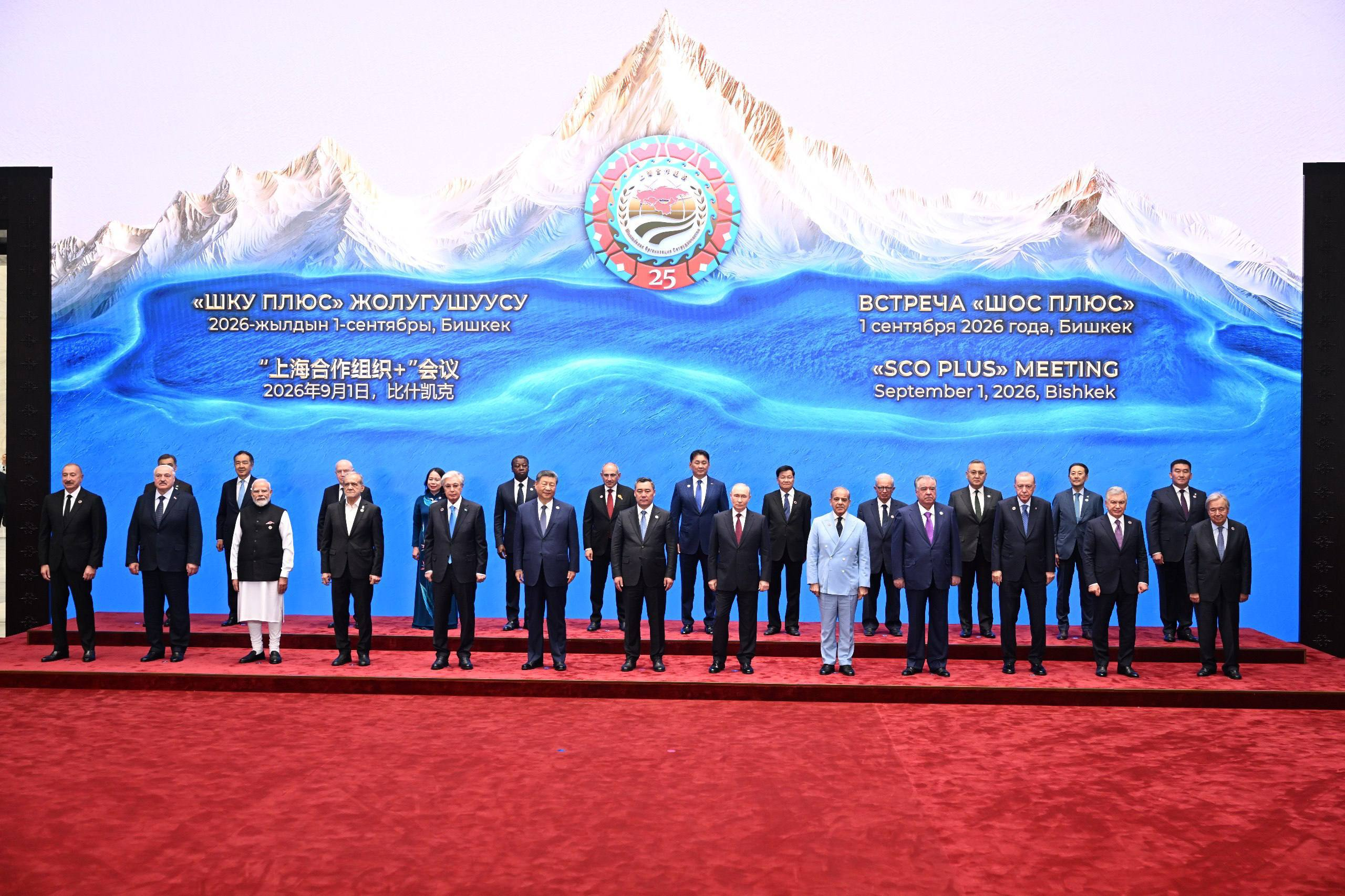
The Bishkek Summit has given the Shanghai Cooperation Organisation a defining opportunity. After twenty-five years of institution-building, geographical expansion and growing diplomatic influence, the SCO now stands ready to translate its collective strength into practical gains for its people. The decisions taken in Bishkek reveal an organisation preparing to shape Eurasia through security cooperation, economic connectivity, technological progress and a renewed culture of dialogue.
President Sadyr Japarov’s stewardship gave the summit both substance and symbolism. Kyrgyzstan brought the leaders of a vast and diverse region together under the theme, “Twenty-Five Years of the SCO: Together for Sustainable Peace, Development and Prosperity.” This theme captured the organisation’s journey while directing attention towards its future responsibilities.
The summit brought together countries with different political systems, development experiences and foreign policy priorities. Their presence around one table demonstrated the continuing value of the Shanghai Spirit, founded upon mutual trust, mutual benefit, equality, consultation, respect for cultural diversity and pursuit of common development. At a time of global uncertainty, this ability to preserve dialogue across differences represents a strategic asset.
The adoption of the Bishkek Declaration and 27 additional documents reflected the widening scope of SCO cooperation. The agenda covered political coordination, regional security, trade, investment, energy, industry, environmental protection, tourism, emerging technologies and institutional reform. Such breadth shows how profoundly the organisation has evolved from its initial security focus into a comprehensive platform for Eurasian cooperation.
The deeper message from Bishkek concerns the relationship between peace and development. Regional stability grows stronger when societies possess economic opportunity, reliable connectivity, quality education and confidence in their shared future. Security cooperation therefore gains lasting value when accompanied by investment, employment, technological access and stronger human connections.
The summit’s decisions concerning a Universal Centre for Countering Challenges and Threats and the Executive Committee of the SCO Anti-Drug Centre deserve particular attention. Terrorism, extremism, narcotics trafficking, cybercrime and organised criminal networks increasingly operate across borders. Effective responses require coordinated assessments, rapid exchanges of information, specialised training and sustained institutional cooperation.
Economic cooperation offers an equally important test of the organisation’s maturity. Eurasia possesses immense natural resources, major industrial economies, youthful populations and access to some of the world’s most important markets. Its geography connects China, Central Asia, South Asia, Russia, the Middle East and Europe. The SCO can help turn this geographical position into shared prosperity. This requires a connected economic space supported by modern transport corridors, efficient border procedures, compatible customs systems, digital trade platforms and reliable financial arrangements. Roads and railways create their greatest value when goods, services, capital and people can move efficiently across them.
President Xi Jinping’s proposals gave practical direction to this ambition. China’s commitment to implement 100 science and technology cooperation projects with SCO countries during the next three years can strengthen research, industrial capacity and technological skills across the region. Plans for an international artificial intelligence application cooperation centre, a China-SCO port economic cooperation centre in Tianjin and a China-SCO basic education cooperation centre add concrete substance to the organisation’s development agenda.
These initiatives aim to serve universities, research institutes, businesses and young professionals throughout the SCO community. Artificial intelligence, digital transformation and scientific cooperation should become instruments of inclusive growth. An SCO technological partnership centred on skills, accessibility and shared applications would allow every member to contribute according to its capabilities and benefit according to its development priorities.
President Shavkat Mirziyoyev’s emphasis on industrial cooperation, connectivity, digital technologies, artificial intelligence, and food, water and energy security further enriched the summit’s agenda. These priorities speak directly to the daily concerns of Eurasian societies. Water stress, climate pressures, food insecurity and energy disruptions carry serious consequences for development and social stability. Joint research, regional early-warning systems and coordinated resource management can turn shared vulnerabilities into areas of collective action.
The SCO Plus meeting placed these regional efforts within a wider global context. Its focus on the United Nations and a just world order reflected the aspiration for more representative global governance. The SCO’s contribution will become most valuable through constructive engagement, support for international law, respect for sovereign equality and partnership with regional and global institutions.
The organisation’s non-bloc character remains central to this contribution. Its purpose derives from cooperation rather than confrontation. Its members have created a forum where major powers, developing economies and countries with distinct strategic perspectives can pursue common interests through consultation. This patient diplomacy gives the SCO a distinctive place in contemporary international affairs.
The transfer of the chairmanship to Pakistan opens the next phase. Prime Minister Shehbaz Sharif has selected “Turning Vision into Action: Connectivity, Innovation and Shared Prosperity” as the guiding theme for 2026–2027. Pakistan’s location at the meeting point of South Asia, Central Asia, China and the Arabian Sea gives it a natural interest in advancing trade, transit, energy and digital connectivity.
Lahore’s designation as the SCO Tourism and Cultural Capital for 2026–2027 adds a human dimension to this responsibility. The city can become a meeting place for artists, scholars, entrepreneurs, media professionals and young leaders from across the SCO community. Such exchanges can bring the organisation closer to the people whose future it seeks to improve.
Bishkek has provided the political mandate. Pakistan’s chairmanship can now establish a culture of delivery through implementation schedules, responsible institutions and measurable outcomes. Every completed corridor, research partnership, educational exchange and security initiative will strengthen public confidence in the organisation.
The SCO enters its second quarter-century with extraordinary potential. Bishkek showed that its leaders share an awareness of their collective responsibility. Their task now is to give that responsibility visible form. Through wisdom, political will, and purposeful cooperation, the SCO can help transform Eurasia into a continent of connected economies, secure societies, and shared opportunity.
Muhammad Asif Noor
Executive Director, Institute of Peace and Diplomatic Studies,
Director, Centre for SCO Studies- IPDS and Secretary General,
Pakistan-SCO Friendship Forum